Peptides for recovery
BPC-157 and TB-500 are the two most-discussed recovery peptides, studied for tendon, ligament, muscle, and soft-tissue repair. Here is what the research shows and why they are commonly stacked.
What the research shows
BPC-157 (Body Protection Compound) has strong animal data for tendon, ligament, and gut healing, with roles in tissue repair and new blood-vessel formation. TB-500, a synthetic fragment of thymosin beta-4, is studied for cell migration, flexibility, and reduced inflammation. Human trial data for both remains limited, which is why they are research compounds.
Why they are stacked
Researchers commonly run BPC-157 and TB-500 together because their mechanisms are complementary, making them the standard recovery pairing.
Verified recovery peptides
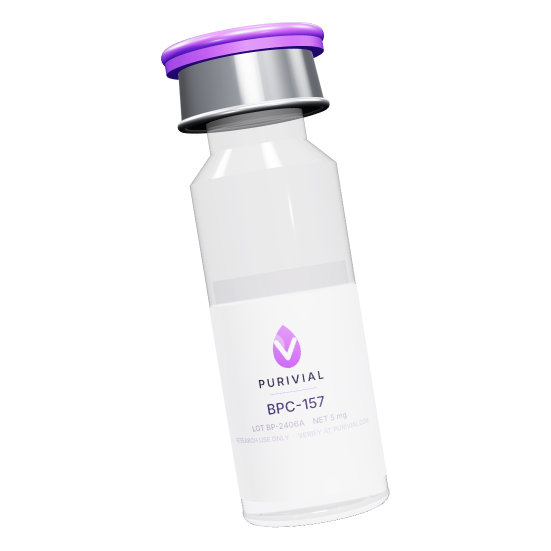

Recovery peptides you can verify
Every vial ships with a batch-specific COA, HPLC purity, and mass-spec identity.
Browse the full catalogFAQ
What are recovery peptides studied for?
Tendon, ligament, muscle, and gut-tissue repair, primarily in animal models.
Should BPC-157 and TB-500 be stacked?
They are commonly run together as a complete recovery protocol.
Are these approved for human use?
No. They are sold for laboratory and research use only. Statements have not been evaluated by the FDA.
Related: BPC-157 explained · TB-500 explained · How we verify